

Diavola pizza is a spicy salami pizza built around the contrast between savoury meat, melted cheese and chilli heat. It can look similar to pepperoni pizza, but the two names do not guarantee the same toppings or the same experience. Diavola describes a style of pizza; pepperoni identifies the sausage that gives another familiar pizza its name. The useful question is not simply which one is hotter, but what each restaurant puts on it.
For anyone who enjoys a generous, savoury pizza, both can be appealing choices. One might emphasise the seasoning of the meat, while another adds a more direct chilli kick. Understanding that difference makes a menu easier to navigate—and helps you choose a pizza you will enjoy from the first slice to the last, rather than ordering on the strength of a familiar name alone.
What makes a pizza a Diavola?
Spicy salami and mozzarella are common starting points for Diavola. Tomato sauce often appears too, although there are also versions without it. Beyond those ingredients, the details vary: a restaurant might use a particular Italian salami, add fresh chilli, or introduce heat through chilli oil. That is why Diavola is better understood as a recognisable combination with variations, not a single fixed ingredient list followed by every kitchen.
The appeal is the relationship between the toppings. Salami brings concentrated savoury flavour, mozzarella adds a softer, creamy element, and chilli gives the combination its spicy edge. A satisfying slice needs more than intensity: there should still be room to notice the cheese and the bread beneath it. For a diner, the pleasure lies in that balance, not in how many fiery ingredients can fit onto the dough.
The name of the salami can also be worth noticing. A menu that specifies a particular type gives you a clearer idea of the restaurant’s approach than one that says only “spicy meat”. Different cured sausages can have different seasoning, texture and character, so replacing one with another changes more than the appearance of the pizza. You do not need to know every Italian salami by name to appreciate the distinction.
Nor should a Diavola photograph be treated as a complete description. Red slices, browned cheese and a scattering of green leaves may look familiar, while the ingredients underneath differ considerably. Use the picture to get a sense of presentation, then read the description for the meat, sauce and additional chilli. Those few details tell you much more about what you are about to order.
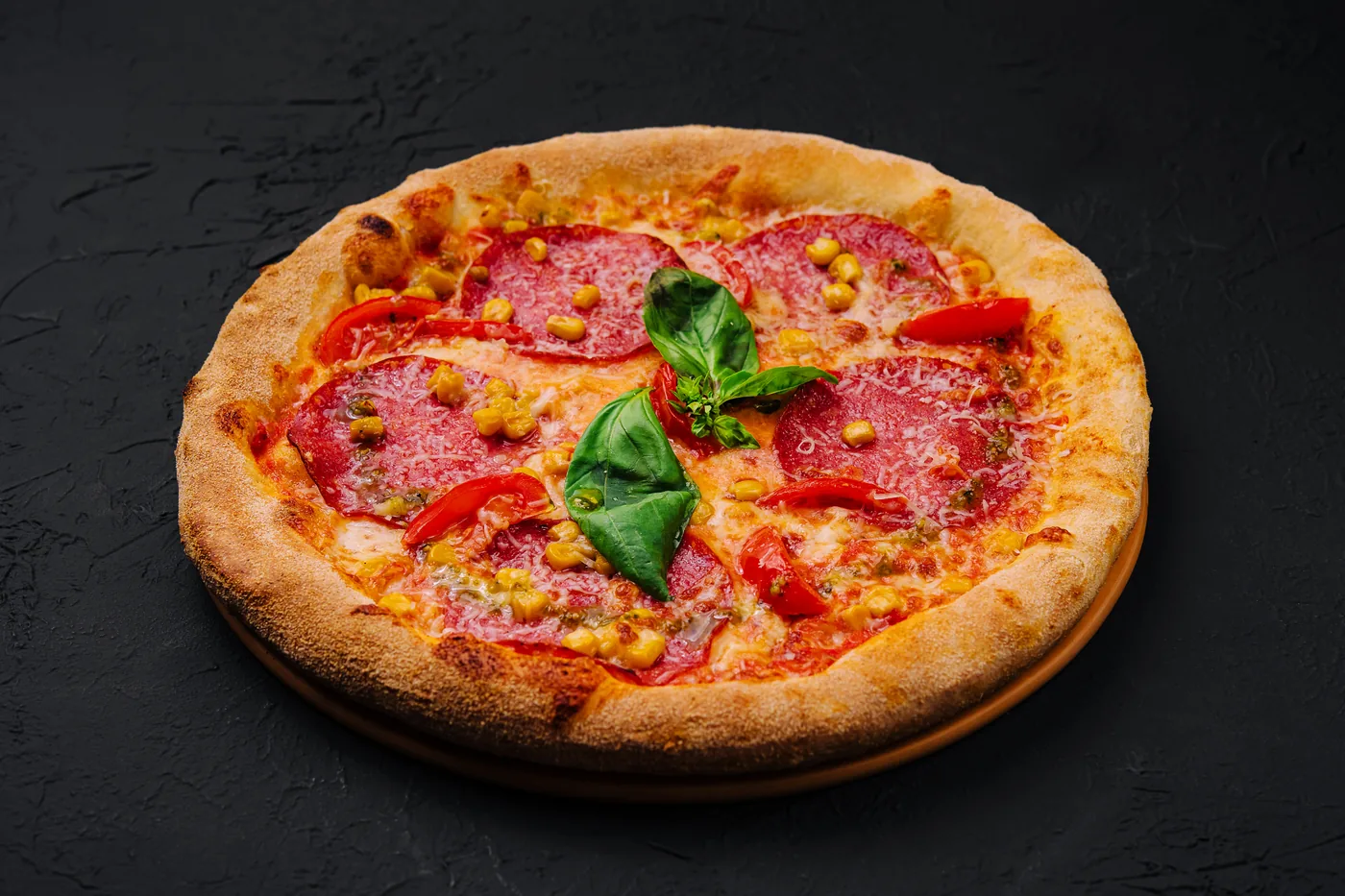
Diavola vs pepperoni: the important differences
Pepperoni is a seasoned, cured sausage used as a pizza topping. It has its own savoury, spicy character, although its precise ingredients and seasoning depend on the product. Diavola, by contrast, does not identify one specific sausage: it is the name of the pizza. The distinction matters because two pizzas can belong to the same broad family of cheese-and-salami combinations without using the same meat or tasting identical.
This also explains why it is misleading to describe pepperoni as automatically mild and Diavola as automatically extremely hot. Pepperoni itself can have a noticeable kick. A Diavola might draw most of its heat from the salami or include additional chilli. Neither name supplies a reliable heat rating on its own, and a pizza you enjoyed at one restaurant does not establish how another restaurant’s version will taste.
Sauce, cheese and herbs deserve attention alongside the meat. A tomato-led combination can feel quite different from one that puts more emphasis on cheese, even before you consider the chilli. Likewise, Parmesan, basil or thyme can alter the overall impression. When comparing two menu descriptions, look at the whole combination rather than mentally reducing both pizzas to “cheese with red sausage”.
The practical takeaway is simple: choose pepperoni when that particular topping is what you are craving; consider Diavola when you want to explore a spicy salami combination. If both descriptions sound appealing, the extra ingredients can decide the order. You may prefer a tomato-and-herb direction one evening and a more chilli-focused pizza the next. There is no need to turn that preference into a contest over which is more authentic.
How spicy is Diavola pizza?
There is no universal answer. The salami, any additional chilli, the amount used and your own tolerance all influence the experience. “Spicy” is useful as a broad description, but it is not a measurement. If heat is an important part of your decision, a short conversation before ordering is more helpful than relying on the name or assuming that every Diavola sits at the same point on a mild-to-hot scale.
Ask where the heat comes from. Is the salami itself spicy? Does the pizza also contain fresh chilli? Is chilli oil part of the preparation or something offered separately? These questions distinguish a seasoning built into the meat from an additional topping. They also avoid the assumption that removing visible chilli would necessarily remove all the heat, which may already be present in another ingredient.
If you are sharing, think about the whole table. A pizza that suits one enthusiastic chilli lover may not be everyone’s preferred main course. Ordering contrasting pizzas can make a shared meal more enjoyable than expecting a single choice to suit every appetite. And if you would like an ingredient changed, ask what the kitchen can accommodate before ordering rather than assuming that every combination can be adapted.
Choosing between Diavola and Pepperoni at Trattoria Vineyard
At Trattoria Vineyard, the two pizzas have distinct descriptions. Diavola is listed with mozzarella, spicy Italian salami identified as spianata calabro, fresh chilli, olive oil and basil. Pepperoni combines Napoli sauce, pepperoni, Parmesan, mozzarella, thyme and olive oil. These are the ingredients shown in our current pizza menu, which is the best starting point when deciding between them.
Based on those descriptions, Diavola is the more explicitly chilli-focused choice: it names both spicy salami and fresh chilli. Pepperoni offers a different combination built around its named sausage, Napoli sauce, two cheeses and thyme. That is an ingredient-based comparison, not a promise of an exact heat difference. If you are sensitive to spice, check with the team before choosing either.
For a contrasting pizza at the table, you could also consider the sweet-and-savoury direction explored in our guide to pear and Gorgonzola pizza. Variety can be more interesting than ordering several pizzas with nearly identical flavours, especially when everyone enjoys trying a different slice. Choose the combinations that genuinely appeal to your group rather than treating the menu as a checklist.
A good pizza order starts with what you want to eat: the character of the meat, the cheese, the herbs and the amount of heat you enjoy. Diavola and Pepperoni offer two ways into that savoury, satisfying territory. Browse the menu, contact Trattoria Vineyard if you have questions, and choose the combination that sounds right for your next meal.