

Pear and Gorgonzola pizza can sound like an unexpected choice if your usual order starts with tomato, mozzarella and pepperoni. Fruit alongside blue cheese suggests a different kind of meal: perhaps sweeter, perhaps stronger, perhaps something better suited to a cheese board. Yet the idea is straightforward. The pear brings gentle sweetness and a fruity aroma, while the cheese provides a savoury contrast. On a pizza, those two elements become part of the same mouthful.
The result is not automatically a dessert pizza, nor does it have to be an overwhelming blue-cheese experience. Much depends on the other cheeses, the sauce and how prominently the pear and Gorgonzola feature. If you are considering ordering it, the useful question is not whether fruit belongs on pizza. It is whether this particular balance of creamy, savoury and sweet sounds like something you would enjoy.
What does pear and Gorgonzola pizza taste like?
Think of the pairing as a conversation between two distinct ingredients. Pear offers sweetness without needing to taste like jam, while Gorgonzola brings the recognisable character of blue cheese. Together, they give you something different from a pizza led by tomato acidity, spicy sausage or salty cured meat. Neither ingredient needs to disappear into the other: part of the appeal is being able to notice the fruit and the cheese separately, then enjoy how they meet.
For someone who already likes fruit with cheese, the combination is easy to understand. The pleasure comes from contrast rather than from making everything taste alike. A bite with more pear may feel gentler and fruitier; one with more blue cheese may seem more assertive. That variation can make the pizza interesting across several slices. It is also why sweetness should not be confused with blandness: adding fruit does not remove the cheese's distinctive aroma or guarantee that everyone will find it mild.
Texture matters too, although the name alone will not tell you exactly what to expect. A firmer piece of pear and a softer one create different experiences against melted cheese and pizza dough. The way the fruit is prepared therefore matters as much as its presence on the ingredient list. When choosing from a menu, leave room for that variation instead of expecting every pear pizza to resemble a photograph you have seen online.
The most helpful distinction is between a savoury pizza with a sweet element and a pizza designed around sweetness. Pear and Gorgonzola usually points towards the first idea, particularly when the rest of the topping is a cheese blend. You are choosing a cheese-led dish with fruit in the balance, not simply replacing a chocolate or custard topping with something more unusual.
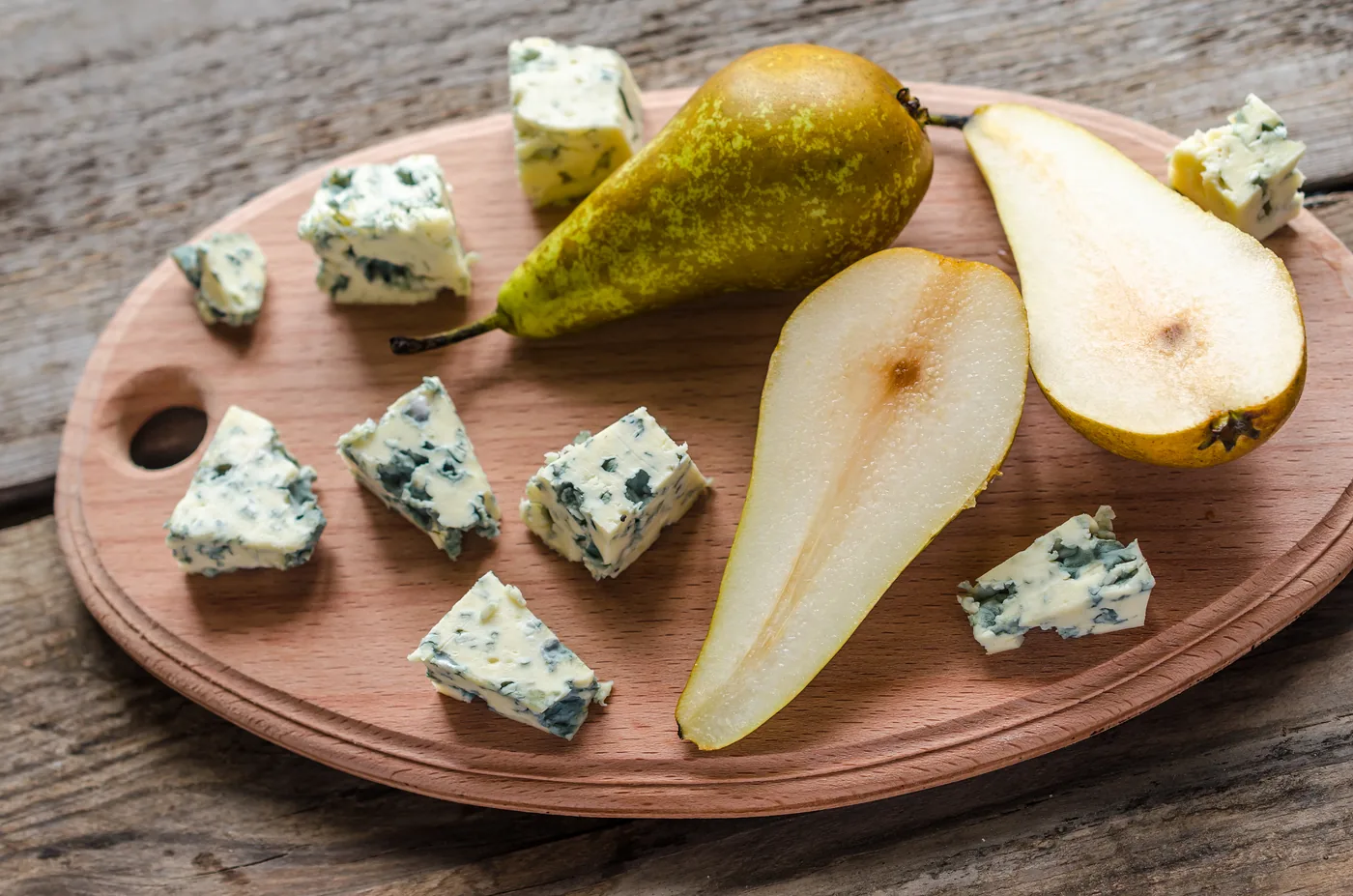
Why the cheese blend matters
Gorgonzola comes in different styles. Dolce is the softer, creamier and milder style; piccante has a more pronounced flavour and a firmer, more crumbly texture. Those differences help explain why two pizzas described as “pear and Gorgonzola” can give quite different impressions. However, a menu that simply says Gorgonzola does not identify the style, so it is better to ask about the overall flavour than to assume which one the kitchen uses.
The other cheeses are just as important to the finished dish. A pizza with several cheeses is not the same experience as eating a piece of blue cheese on its own. There are other flavours and textures around it, and the balance depends on how much of each ingredient is used. This does not make the Gorgonzola irrelevant; it means that “contains blue cheese” is only the beginning of the description, not a complete prediction of the taste.
That is especially useful to remember if you are curious but cautious. Rather than asking only whether the pizza is strong, ask whether the blue cheese is the dominant flavour or one part of a broader cheese combination. If you enjoy a little blue cheese alongside bread or fruit, a mixed-cheese pizza may be worth considering. If you dislike its aroma altogether, pear is unlikely to change that preference. There is no need to order something simply because the combination sounds adventurous.
The same principle applies to the base. A creamy sauce and a tomato-led sauce create different settings for the topping, so two pizzas with the same headline ingredients need not feel similar. Read the whole description: the cheese blend, sauce and additional ingredients tell you more than the dish name alone. Our guide to choosing pizza toppings and dough explores that broader way of looking at an order.
Quattro Formaggi with pear at Trattoria Vineyard
At Trattoria Vineyard, the pairing appears in our Quattro Formaggi pizza. The current menu lists Alfredo sauce, mozzarella, parmesan, cheddar, Gorgonzola, pear, rum and olive oil. Here, pear and Gorgonzola are part of a four-cheese combination rather than the only two toppings. It is a useful example of how a familiar pizza name can introduce a less familiar flavour pairing.
“Quattro Formaggi” and “pear and Gorgonzola pizza” are not competing descriptions. One tells you that the pizza features four cheeses; the other draws attention to a particular pairing within it. Nor should you assume that every four-cheese pizza includes pear. For a guest choosing what to order, the ingredient list is more informative than trying to fit the dish into a single fixed expectation.
Rum is also listed in our version. If you avoid alcohol, check with the team before ordering; the ingredient list does not explain how it is used. Likewise, anyone choosing according to dietary requirements should confirm the full ingredients and available options with the restaurant. These are practical questions to ask about the actual dish, rather than assumptions to make from a name or a food photograph.
How to decide if it is your kind of pizza
Start with the flavours you already enjoy. Pear and Gorgonzola is a promising direction if you like savoury food with a fruity contrast and want cheese to play a central role. It may be less appealing if you specifically want a tomato-forward pizza, a strong chilli kick or a topping built around meat. None of those preferences is more sophisticated than another. The point of exploring a menu is to find an enjoyable meal, not to pass a test of how unusual your order can be.
Sharing can make the choice easier when people at the table have different preferences. One pizza can explore the pear-and-cheese pairing while another offers a contrasting direction. A Margherita gives tomato and mozzarella a more central role; a Diavola takes the choice towards spicy salami and chilli. Ask about sizes and how much to order for your group rather than assuming that a particular number of pizzas will suit every table.
You also do not need to turn the meal into a formal tasting. Notice whether you enjoy the contrast, whether you prefer bites with more fruit or more cheese, and whether you would choose that balance again. Those impressions are more useful for your next order than trying to describe the dish in elaborate terms. A pizza can be interesting without requiring specialist food knowledge to appreciate it.
Pear and Gorgonzola pizza is ultimately an invitation to look beyond familiar topping combinations. The appeal lies in bringing fruit, cheese and a savoury base together while allowing their differences to remain noticeable. If that sounds like your kind of meal, explore Quattro Formaggi at Trattoria Vineyard. For questions about the ingredients or help planning your visit, contact our team before you come.